Homeowners & self-builders
Explore your own ideas first.
Try layouts, rooms and rooflines before you meet an architect. Arrive with a model and drawings that show what you want, plus a clear list of questions for the professionals.
 Talos3DArchitecture
Talos3D Architecture · AI design partner for buildings
Describe what you have in mind with a sketch or a few sentences. Talos3D Architecture's design agent turns it into a real building model that you can explore, change and draw from. It knows a door from a wall and checks its own work. It also tells you plainly what is settled and what still needs a professional. Edit directly, ask an AI agent to continue, or weave both into the same task. You work on one shared model, with every operation traceable.
Watch Talos3D Architecture in action · 2:30
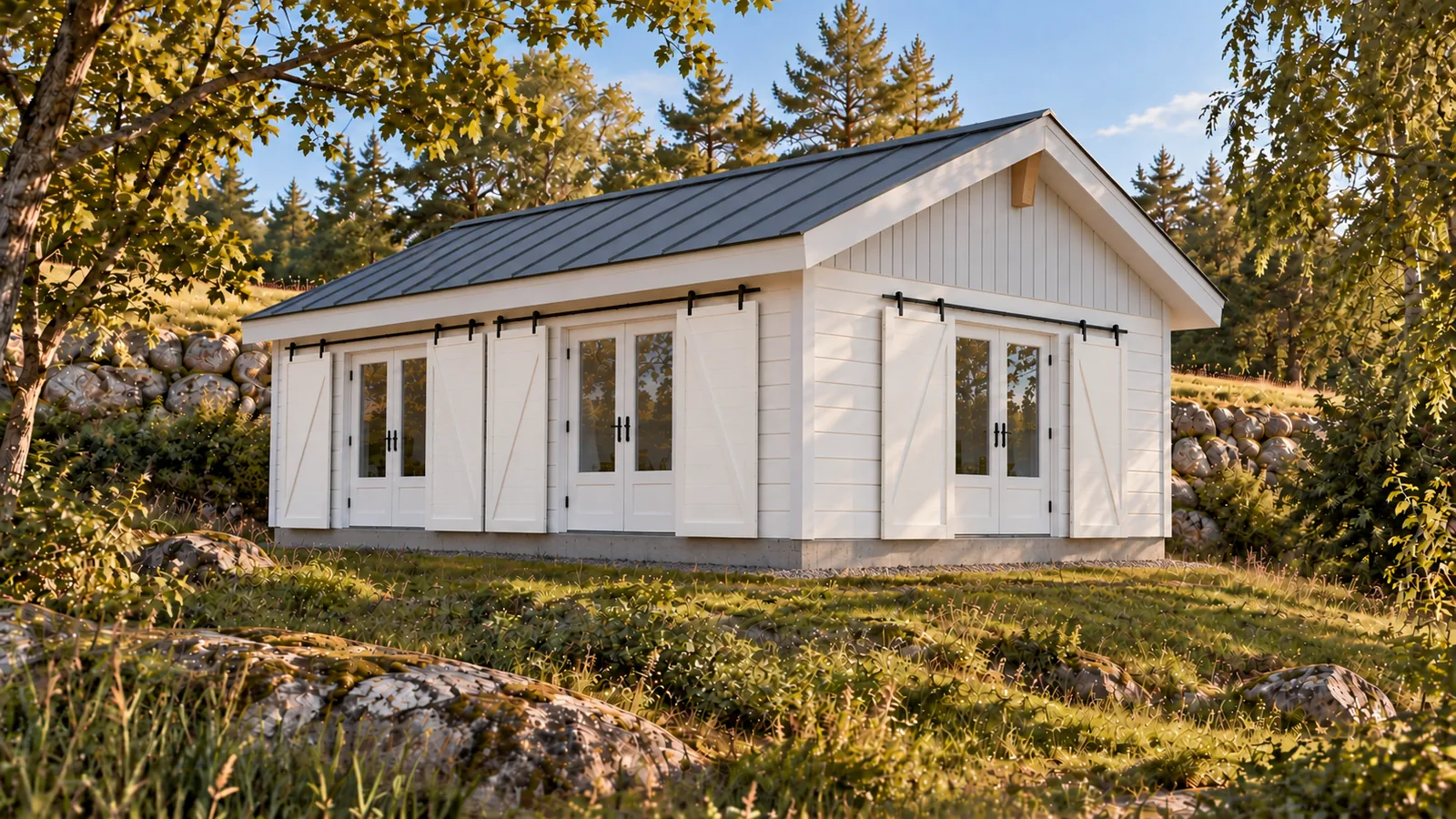
An idea becomes a 5 × 6 metre cottage in four prompts. Follow the model and its AI conversation, then look beneath the finishes at the timber frame.
A five-by-six-metre cottage. Two rooms. A small bathroom. And a roof that opens up the space inside. Let’s build it — in conversation.
First, the brief. Set the footprint, the roof, the character. Talos3D Architecture gives that idea a shape we can explore. Turn it around. Check the proportions. There’s our starting point.
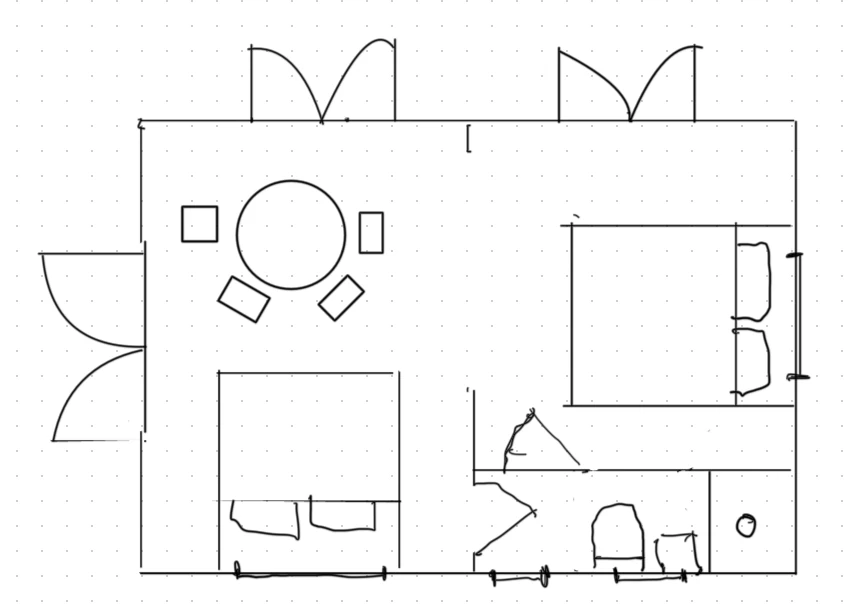
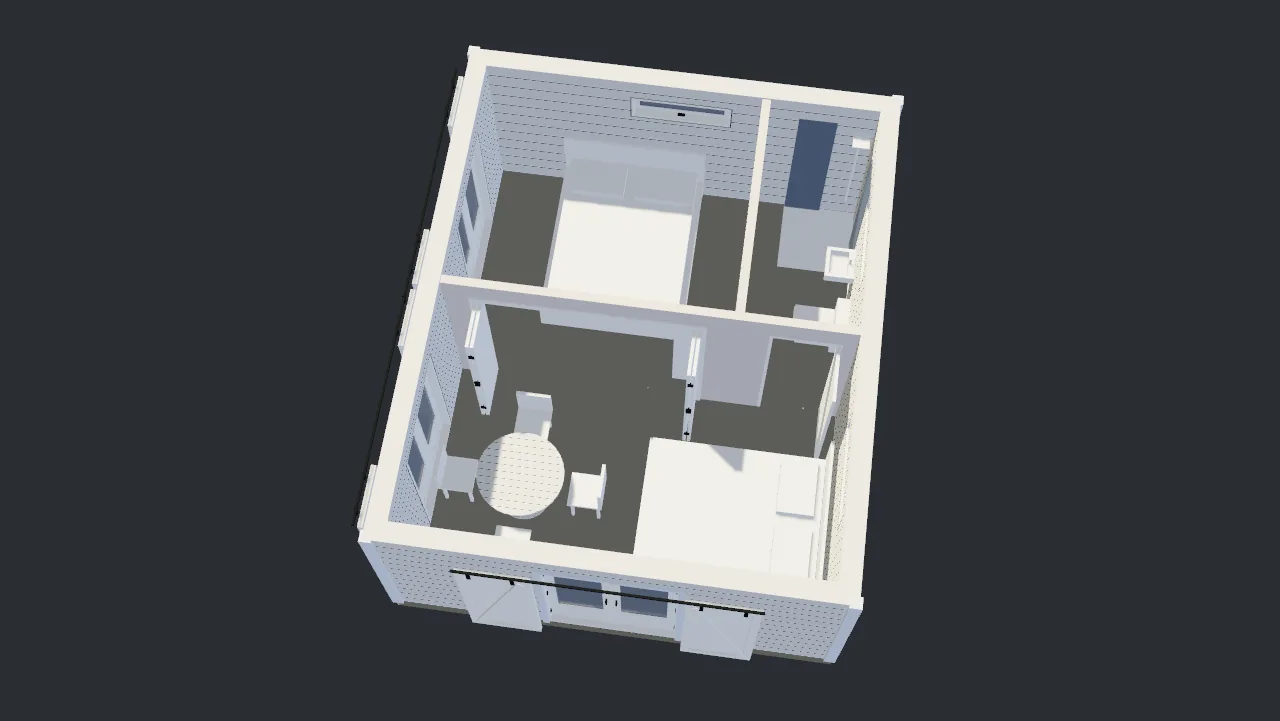
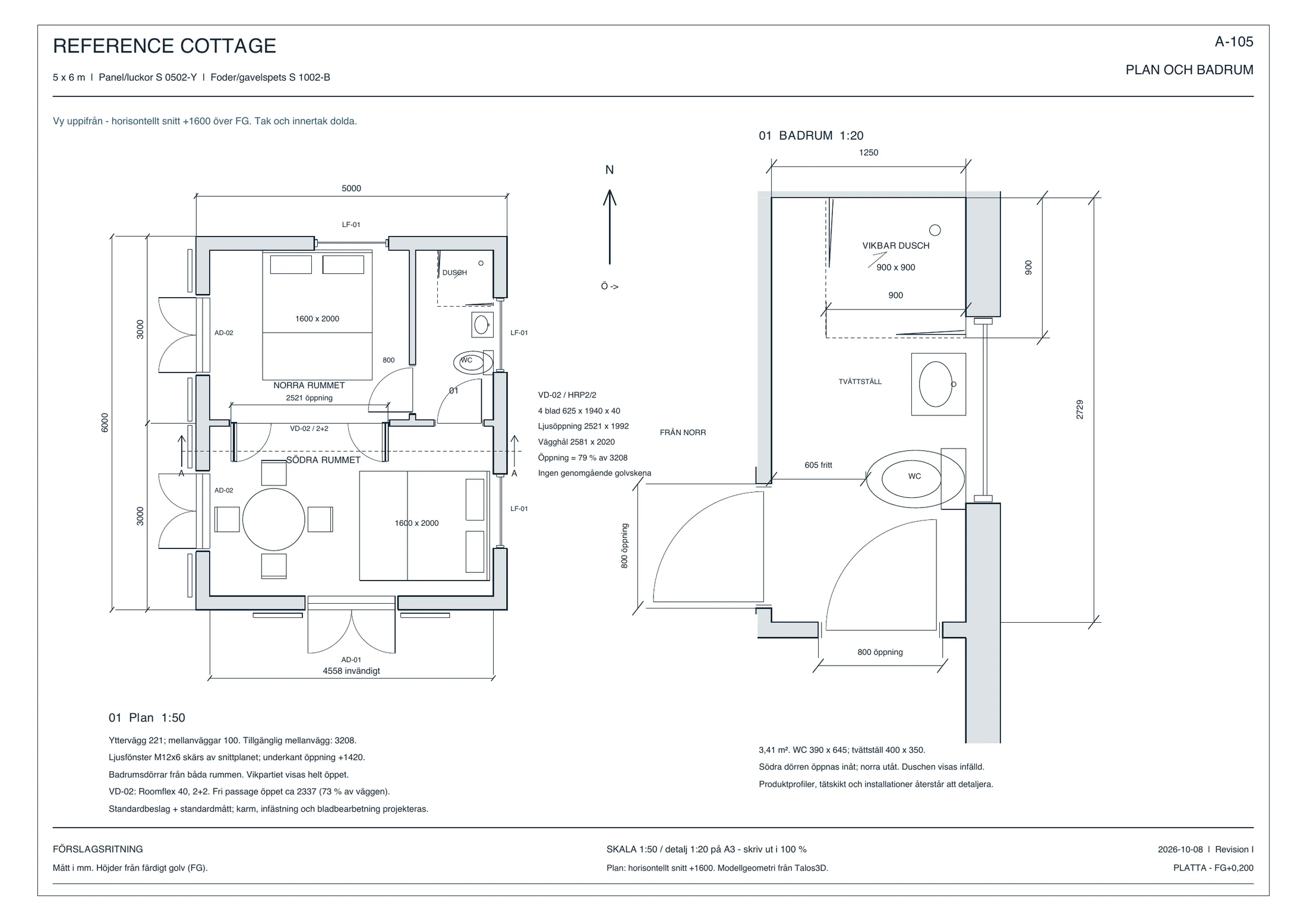
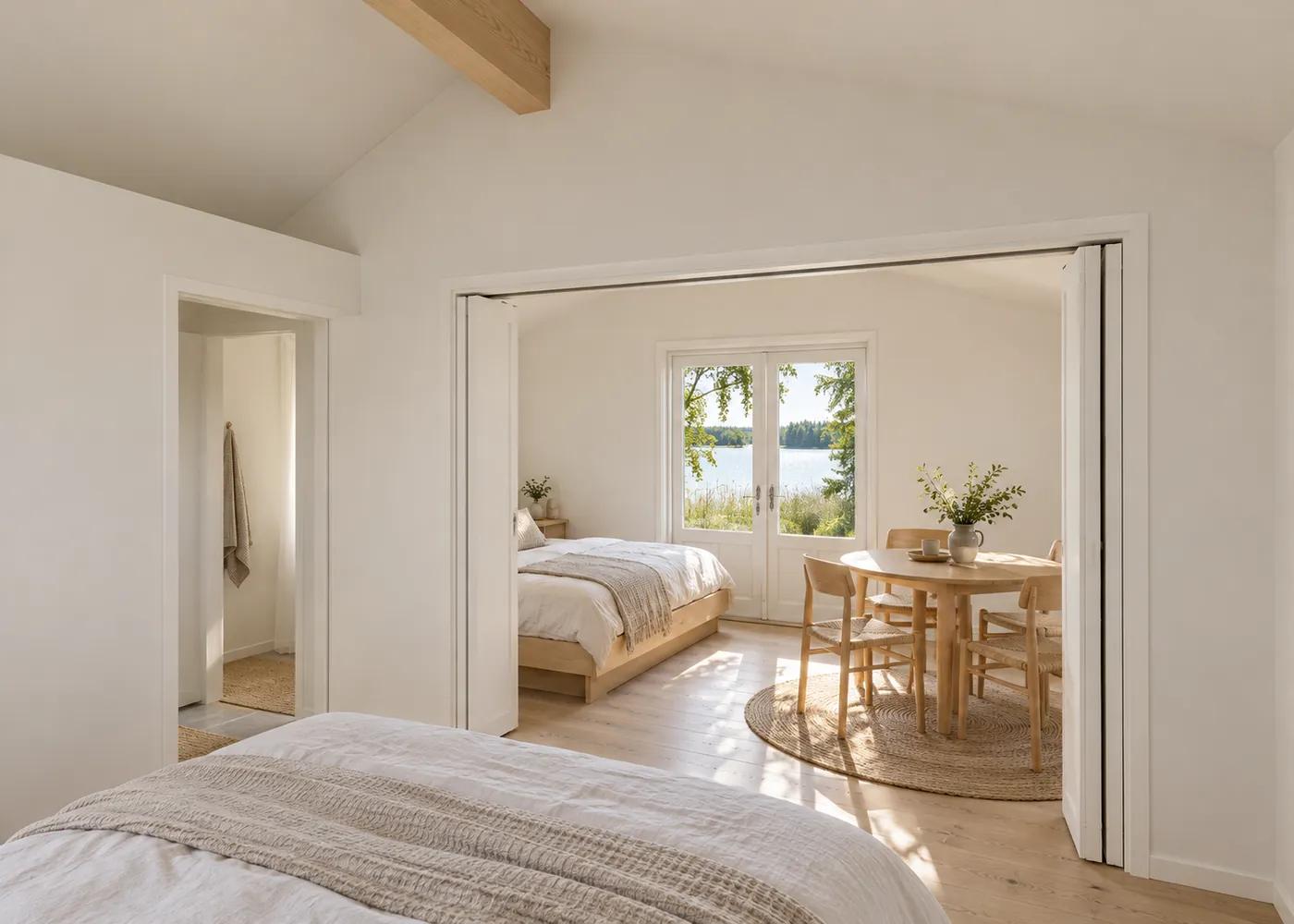
Now make room for living. Two rooms, a compact bathroom, places to sleep, and doors opening towards the lake. Windows and shutters become shared components. We can inspect the layout, check the clearances, and refine the same design.
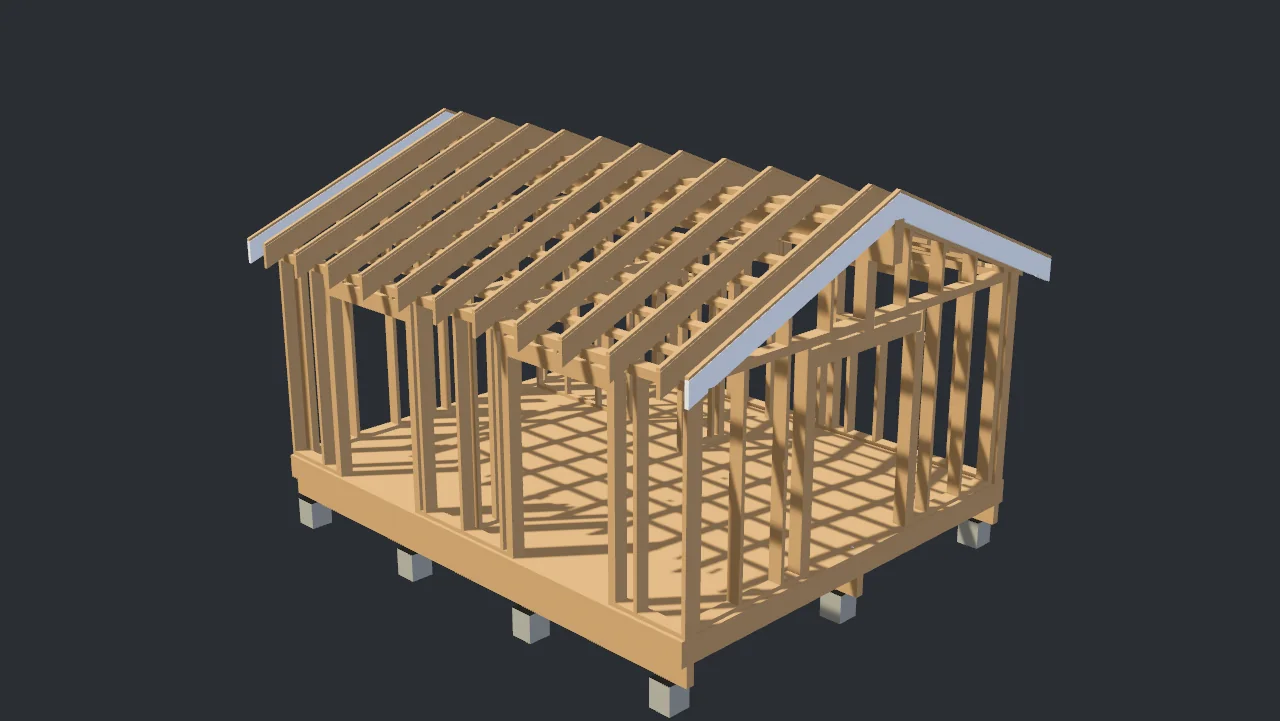
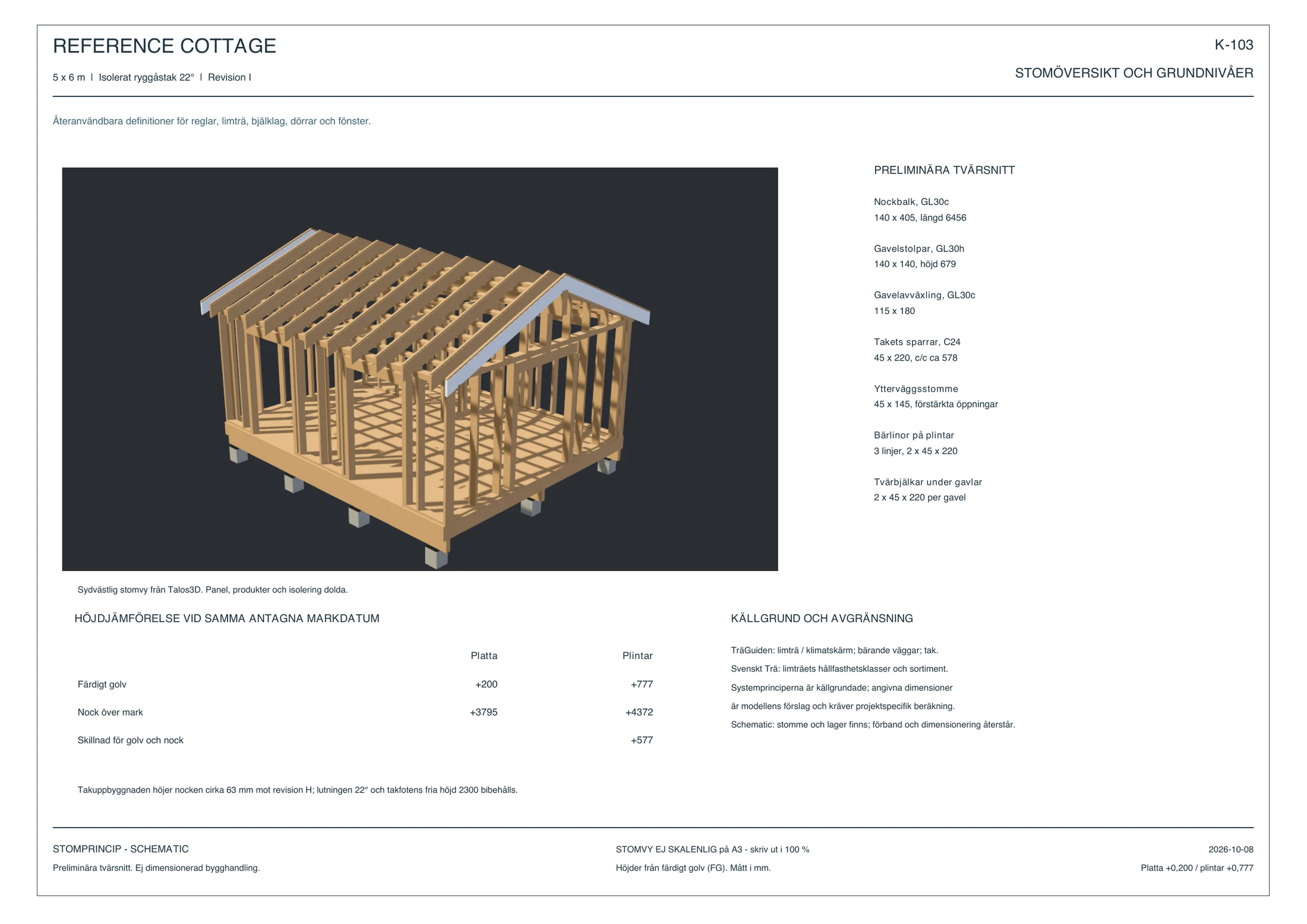
And then — the construction. Ask for timber framing, and look underneath the finishes. Individual studs. Plates and headers around the openings. Above them, timber rafters meet a glulam ridge beam. The wood has material properties too: density, stiffness and strength grade. Follow the supports down through the gables to the foundation. These are editable parts of one coordinated model. This is where the design starts to explain how it goes together.
Keep asking useful questions. Does everything meet? Can the doors and shutters move? How does the foundation change? Inspect the junctions, compare the options, and take drawings and quantities from the model. The remaining engineering decisions stay visible, ready for the next conversation.
From a sketch to a cottage you can explore, refine and understand. Your design judgement. An agent helping you develop it. One editable model. Talos3D Architecture.
Start an empty Talos3D Architecture project from my sketch: a Swedish lakeside cottage with a 5 m east–west by 6 m north–south wall footprint, north/south gables, a 22° roof, 300 mm overhangs and 2.30 m clear eaves height. Keep the rooms vaulted. Use NCS S 0502-Y horizontal siding and timber shutters, NCS S 1002-B vertical gable boards and trim, and charcoal standing-seam roofing. Begin with simple editable massing and four elevation views. Keep assumptions visible and save a first version. Work in perspective while developing the model.
Follow the sketch layout: put the 1.25 × 2.73 m clear bathroom in the northeast corner, with access from the north room through its west side and from the south room through its south end. Include a 900 × 900 mm folding shower, WC and basin. Place a 1600 × 2000 mm double bed against the north wall, and another against the east wall in the south room. Put a round dining table and four chairs in the southwest. Divide the rooms west of the bathroom with four 625 × 1940 mm folding leaves in a 2.52 m opening. Use a centred south glazed double door with a 1500 × 2020 mm rough opening, plus a 1300 × 2020 mm double door in each west room, with sliding shutters. Place shared M12×6 high windows in both east rooms and the north gable: 1180 × 580 mm frames, heads 2010 mm above the floor. Reuse product types, check clearances and save the layout.
Keep the layout and develop the timber construction: 45 × 145 mm wall framing with plates, corners, headers and jack studs; insulation, wind protection, ventilated cladding and an internal service zone. For the vaulted 22° roof, use notched 45 × 220 mm rafters, 220 + 45 mm insulation and layered standing-seam covering. Support a 140 × 405 mm glulam ridge through both gables, using 140 × 140 mm posts and 145 × 195 mm transfer headers above their openings. Assign C24 to solid timber, GL30c to ridge and transfer beams, and GL30h to the posts, with timber appearance, density and stiffness. Compare slab and pier/bearer/joist foundations, then select the slab for this cottage. Show the frame separately from the finishes, check support contacts and save both studies. Keep capacity, connection and site decisions open for engineering verification.
Use the selected slab foundation for the final model. Inspect the design: clashes, unsupported parts, door and shutter clearances, continuous supports, and roof and wall junctions. Resolve modelling issues and retain open engineering decisions. Check geometry and timber properties after saving and reopening. Produce a dimensioned north-up plan, four elevations, wall/roof section, foundation comparison and quantities from the model. Save the native projects, reusable components and verification report. Finish with the cottage and a clear handover of what is resolved and what remains.
Who it's for
Homeowners & self-builders
Try layouts, rooms and rooflines before you meet an architect. Arrive with a model and drawings that show what you want, plus a clear list of questions for the professionals.
Architects
Test variants with the client in the room. Plans, elevations and sections keep up with every change, so your time goes into design, not redrawing.
Builders
Framing, real door and window sizes and foundation alternatives sit in one model. The open engineering questions are listed up front, not discovered on site.
What makes Talos3D Architecture different
Most AI tools make pictures. Talos3D Architecture builds a real model of the building, where every wall, roof, door, window and stud knows what it is. That changes what an AI partner can do for you. Each point below was put to work in the Reference Cottage project.
Understands buildings
Every part of the model knows what it is and what it belongs to. Change one window type and every matching window follows.
The three high windows share one design. Resizing it updates all three.Real products
Openings are sized from manufacturers' catalogues instead of invented dimensions, so what you see is close to what you can order.
The patio doors and windows match a Swedish manufacturer's standard sizes.Checks its own work
After every change the agent measures and tests the result. Does the door clear the bed? Does the roof rest on its walls? Problems are caught in the model, not on site.
Every door swing was tested against the furniture, and all 32 structural contact points were checked.Honest about open questions
Every assumption says where it came from: your brief, a product catalogue or common practice. Anything that still needs an engineer or architect is listed openly, not guessed.
Snow loads, connections and footings are marked as open, so the drawings say proposal, not construction set.Grows with you
Start with rough volumes and add detail only when you are ready. You can change your mind at any point, even late, and the model keeps up.
The roof pitch dropped from 30° to 22° after the first drawings existed. Everything followed.Drawings included
Plans, elevations, sections and schedules come from the same model, so they always reflect the latest change.
Eight A3 sheets, re-issued with every revision.How it works
Move a wall yourself, ask an agent to develop the framing, then refine a window together. Switch freely between direct editing and conversation, alternating or interleaving tasks as the design develops. Each picks up from the current model.
Every operation stays in a shared history, whether it comes from a person or an AI agent. Trace who changed what, review the sequence and revisit decisions. The model keeps its context, and you keep control of the design.
The Talos3D family
Talos3D Architecture is the building-design application featured on this site. It brings architectural tools and construction knowledge to the shared Talos3D platform.
For developers & contributors
The open-source 3D modelling platform underneath Talos3D Architecture. Its public repository contains the shared foundation for building applications and contributing to the platform.
Room for future editions
The same Core can support more specialized editions built by the community or released by Appverket, with tools and knowledge tailored to their field.
Talos3D Naval is one planned direction for marine design. Other editions may grow from the needs and ideas of the people who build them.
Beta access
We are opening Talos3D Architecture to a small group of homeowners, architects and builders. Apply with your name and email, and we will write when a place opens.